Panama Red · Innovation Sprint
An AI-first innovation tool built on 25 years of CPG work. Your brief goes in; three territories come out sized, rendered and sourced. Days, not months, at a fraction of the cost.
Sprint output · Cenoura & Bronze · Hora Dourada
The problem
Every category review, the same question: what's new? Your distributor wants news, your buyer rewards brands that show up with something worth talking about, and another flavor won't cut it.
The traditional answer is a 12-week project and a war room full of strategists. That machine was built for companies with time and money to burn. You have a category reset in eight weeks.
Where it points
You own one aisle and the mandate says grow beyond it. The sprint finds the adjacent spaces your equity already covers, and sizes each one. See Fever-Tree and Don Julio below.
The portfolio has a gap none of your brands can stretch to cover. The sprint returns three new-brand territories, each with positioning, naming and a rendered prototype. See Pharmacology below.
The growth sits outside your aisle, on a shelf that doesn't exist yet. The sprint hunts that white space. See Thirds below.
Why this isn't ChatGPT
The problem is not to see what nobody has yet seen, but to think what nobody has yet thought about what everybody sees.
Arthur Schopenhauer. The line the Curiosity Engine is built on.
Generic AI returns the most probable answer: the middle of the curve. In innovation that means another flavor of what your category already shipped, and your competitors are pulling it from the same tools.
The Innovation Sprint runs on the Curiosity Engine, built to manufacture friction. It refuses the first answer five times and forces together domains that don't belong in the same room. Consensus produces the answer everyone already has. Friction produces the one your category hasn't seen.
Below, four briefs run both ways: what a general-purpose model returns, and what comes back with the engine running.
Same brief, both machines
Two of these briefs carry real brands. Two started from a blank page.
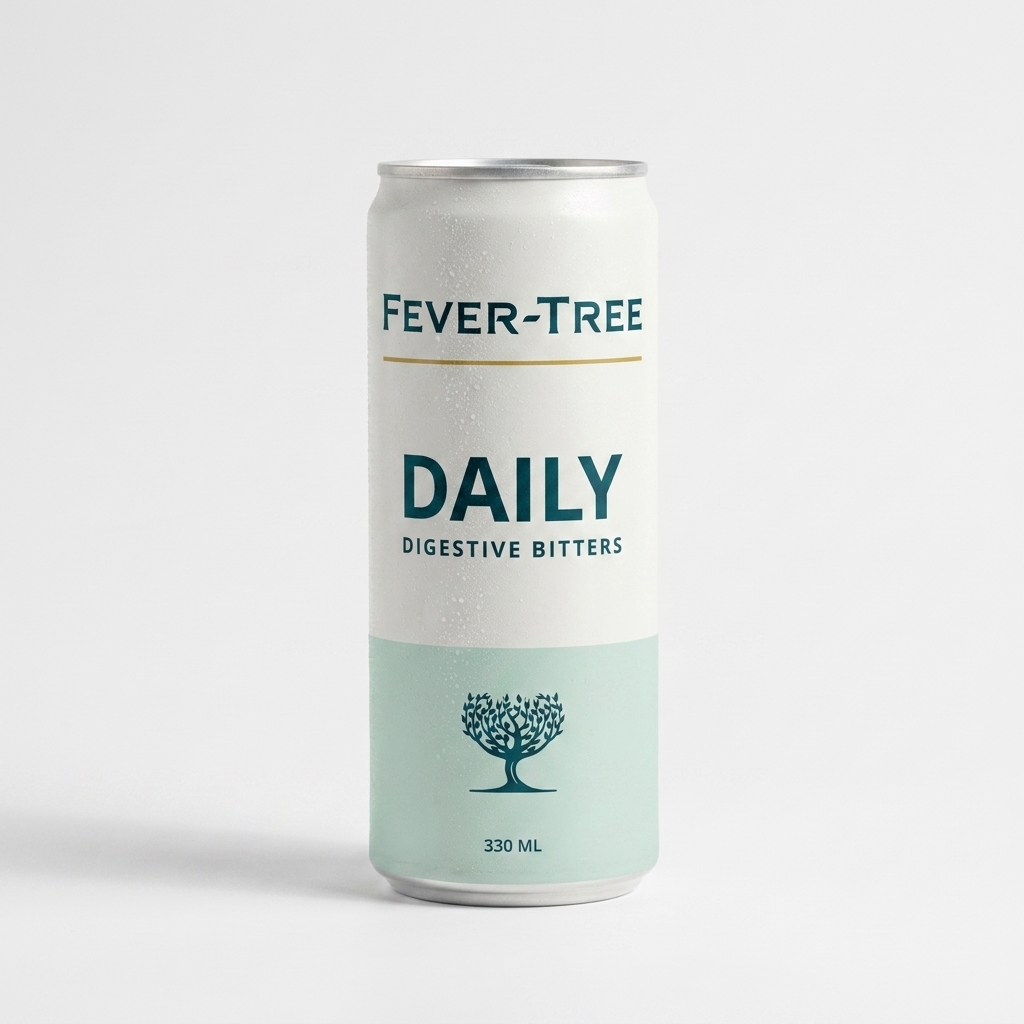
The brief: Grow in the US while gin, tonic’s biggest partner, is in sharp decline.
Five ideas that all keep tonic tied to the thing that is shrinking.
Gin carried tonic for a decade, and the host category turned: UK premium-plus gin volumes fell 16% in 2023, with another 5% forecast off every year through 2028. Marketing does not fix a structural dependency, so the growth has to come from cutting the tie.
Source: IWSR, premium-plus gin volumes, UK and forecast to 2028.
Quinine was medicine before it was a mixer. Tonic’s own history is functional, and it never needed a spirit to justify the glass.
“Daily”: tonic stops waiting on gin and becomes the whole drink. Digestive bitters as an everyday ritual, sugar pulled back, poured over ice, no spirit needed.
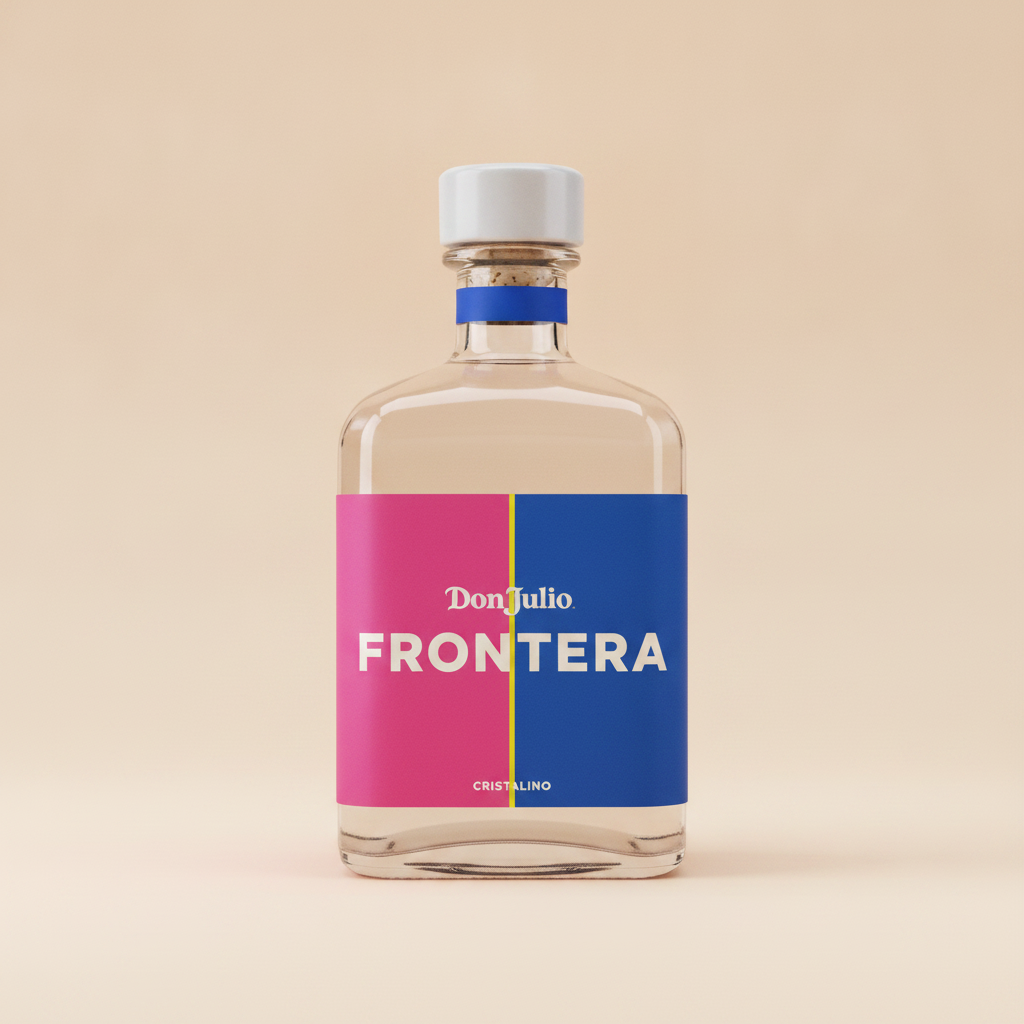
PrototypeThe brief: Celebrate Mexico for the US market without a single mariachi or sombrero cliché.
Every one of these is the postcard, printed at a higher resolution.
The US decides this category, and tequila and mezcal are now second there by revenue at $6.7bn, ahead of American whiskey at $5.2bn. It over-indexes with Hispanic drinkers and with under-35s, and the advertising has not moved with them.
Sources: DISCUS 2025 Economic Briefing; NielsenIQ.
The people carrying this category are not from Mexico or from the US. They are from the border, which has its own language and already spends.
“Frontera”: the border as a place of its own, spoken in Spanglish and worn as pride. “Ni de aquí, ni de allá, de las dos.” A cristalino aged eighteen months and filtered clear, with English and Spanish mirrored on the label so neither one is the translation.
PrototypeThe brief: A new luxury skincare brand for the post-Ozempic longevity consumer, from scratch. Anti-aging and clean beauty both banned by the brief.
Banned from two frames, the model reaches for the third one everybody already uses.
Whole cohorts walked out of anti-aging, the “natural” claim wore out, and the goal moved from looking younger to living longer. The category is still selling the fight against time to people who already left it.
Sources: cited panel by panel in the sprint’s Atlas.
The line between pharma and cosmetic already dissolved in the consumer’s bathroom, where the GLP-1 pen sits next to the serum. Luxury skincare is the last place still performing purity.
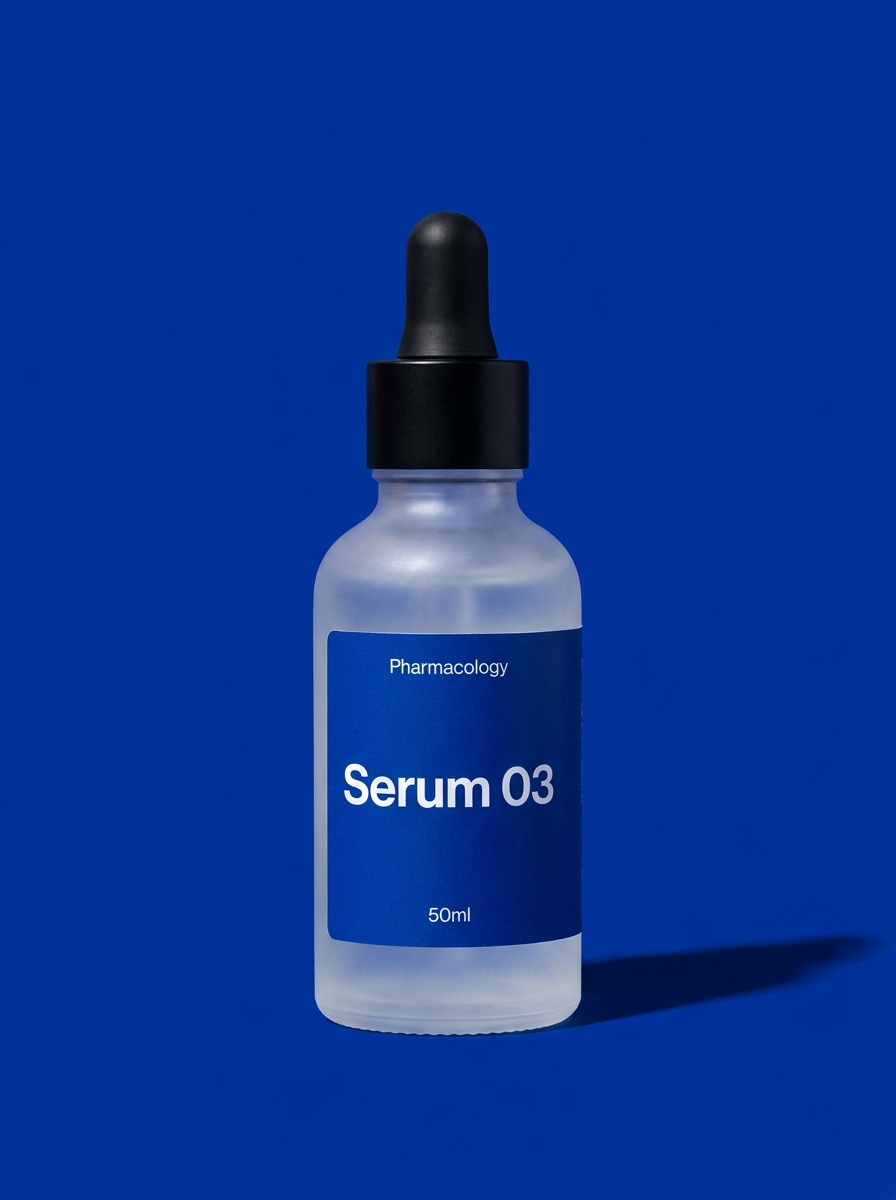
“Pharmacology”: results spoken in the language of medicine. Serum 03, a numbered serum in frosted glass with a klein-blue label, doses and evidence printed where the poetry usually goes.
PrototypeThe brief: Build the food brand for the appetite that shrank, in the US, from scratch. It cannot feel like a diet, and it cannot feel like a patient’s meal.
Asked not to sound like a diet, it produced the diet aisle.
One in eight American adults has taken a GLP-1 drug, and households with a user cut grocery spending by about 6% within six months, with calorie-dense snacks falling hardest. Portion, pack and price still assume the old stomach. Nestlé read the same signal and launched Vital Pursuit, its first major new US brand in three decades.
Sources: KFF Health Tracking Poll, May 2024; Cornell University × Numerator household panel; Nestlé announcement, 2024.
Small portions already read as luxury wherever chefs are in charge. Eating less is a tasting menu, not a restriction, and nobody has brought that reading to the weekday table.
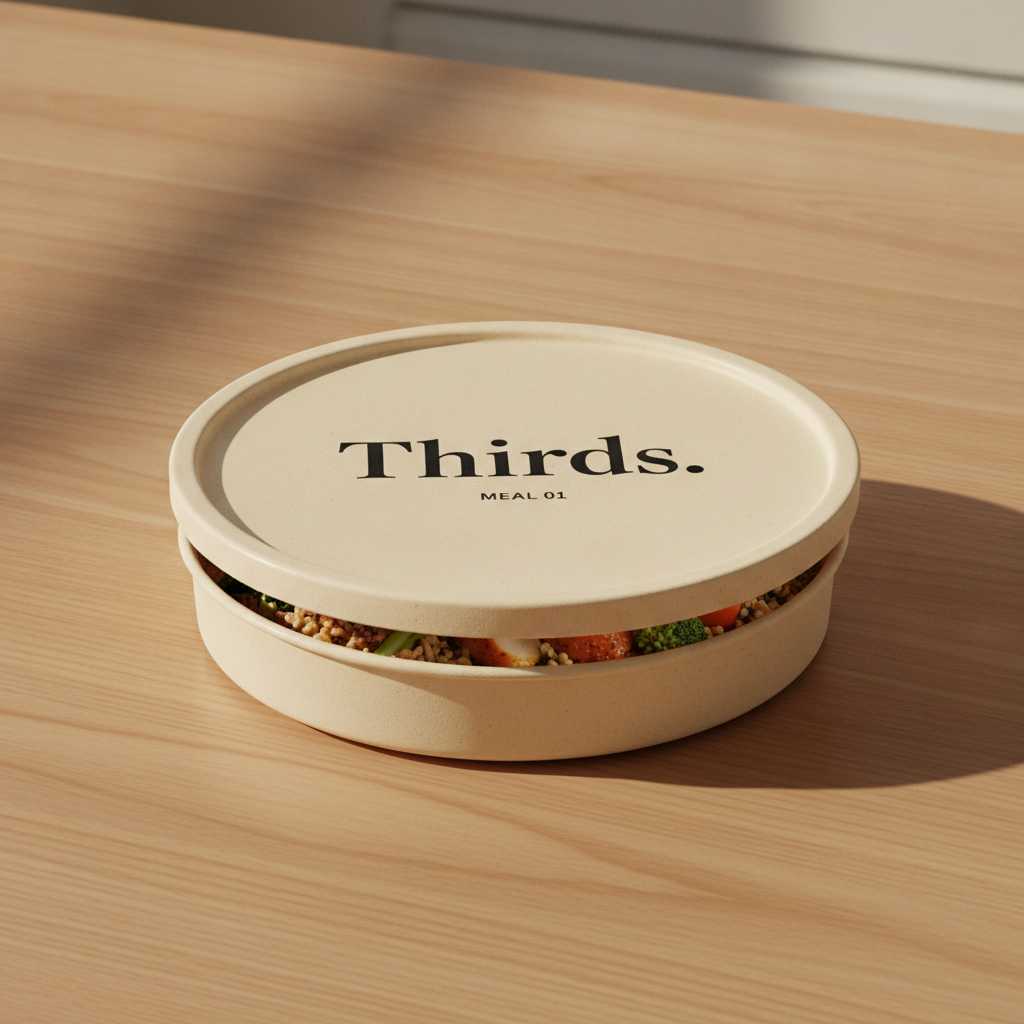
“Thirds”: a full meal at a third the size. Meal 01 is chef-composed and protein-dense in a small lidded tray, and the value math moves from volume to density: fewer bites, priced by the plate.
PrototypeThe precedent
Four brands that refused their category's obvious answer, and what it was worth. That move is what the sprint goes looking for, on purpose and in days.
Water sells on purity: springs, mountains, blue labels.
Water in a tallboy, sold on death and heavy metal.
Valued at $1.4bn in its 2024 round.
Soda is the habit you apologize for and quit.
Soda with fiber, sold as gut health in nostalgic flavors.
Valued at $1.85bn in 2025. PepsiCo paid $1.95bn for its rival Poppi the same year: the category two startups invented became big soda's shopping list.
Daily nutrition is a powder you choke down or a pill you forget.
The full greens routine as gummy bears, in a snack pouch.
Unilever paid $1.2bn for it in 2026, three years after launch.
Non-alcoholic beer is the sad can for the designated driver.
NA beer brewed for athletes, sold on training days and trail runs.
Sixth-biggest craft brewery in the US, selling no alcohol at all.
Valuations, deals and rankings: Bloomberg, Mar 2024 (Liquid Death); CNBC, Feb 2025 (Olipop); PepsiCo/CNBC, 2025 (Poppi); Unilever press release and Forbes, Apr 2026 (Grüns); Brewers Association Top 50, 2025 (Athletic).
The process
Five steps. You're in two of them.
You send it, we discuss it, we sharpen it together. Garbage in, garbage out: this step is human.
Your brief goes through the methodology: cultural panels, semiotic analysis, category data, adjacent behaviors.
Three structurally different territories, sized, with full concepts and rendered prototypes.
We review together, you push back, we adjust. The tool is fast; the judgment is 25 years old.
A boardroom-ready presentation, plus the Atlas with every source cited.
What comes back in the room
This is insane.
I have no words.
I don't see anyone using AI like this.

Built by Thiago Bersou: 25 years running innovation for Unilever, Diageo, Pernod Ricard and AB InBev, plus the agencies they hire. The Sprint is that machine, rebuilt.
The full story →Final step
Book 30 minutes and I'll walk you through a sprint I've already run, start to finish: the territories, the prototypes, every source in the Atlas. Then you decide if you want it pointed at your category.
Rather write first? Get in touch: thiago@panamared.cc